Sheet metal fabrication
Sheet metal fabrication in Lithuania
Laser cutting, bending, robotic welding, powder coating and assembly of sheet metal and tube parts – all under one roof in Kaunas. One supplier, one lead time, one point of accountability.
- 1 plantcutting to coating and assembly
- 12 kWfibre laser, 4000 × 2000 mm
- 3 metalsaluminium, steel, stainless
- From 1 pcprototype to series
Sheet metal fabrication – key facts
UAB Alumnita is a sheet metal fabrication company in Kaunas, Lithuania, part of Tututis Group. We manufacture complete sheet metal and tube parts to customer drawings: laser cutting, tube laser cutting, bending, stamping, CNC milling, robotic and laser welding, powder coating, assembly and packing – all in our own plant.
- Service
- Sheet metal fabrication and contract manufacturing
- Location
- Raudondvario pl. 127, LT-47188 Kaunas, Lithuania
- Materials
- aluminium, carbon steel, stainless steel, galvanised steel
- Sheet cutting
- 12 kW fibre laser, 4000 × 2000 mm, ±0.02 mm
- Tube cutting
- 3 kW fibre tube laser, bevel and zero-tail cutting
- Welding
- ABB robot with Fronius CMT, laser, TIG, MIG/MAG
- Coating
- powder coating up to 5500 × 1400 × 2600 mm, 430 kg
- Quantities
- from 1 piece to recurring series
- Files
- DXF, DWG, STEP, IGES, PDF
- Markets
- Lithuania, Baltics, Scandinavia, Germany, EU
- Group
- Tututis Group, manufacturing in Lithuania since 1999
What sheet metal fabrication means here
Sheet metal fabrication is the complete route from a flat sheet or a length of tube to a finished, coated and assembled metal product. It is not a single machine operation: it is a chain of cutting, forming, joining, surface treatment and assembly, in which every step has to fit the one before it.
Most suppliers sell one link of that chain. A part is cut at one company, bent at a second, welded at a third and coated at a fourth. Every handover adds transport, a new setup, a new datum and a new place for responsibility to disappear. When a welded assembly distorts, nobody can say whether the cut, the fixture or the weld sequence caused it.
Alumnita runs the whole chain in one plant. We cut the blank ourselves, design and build the welding fixtures around the parts we cut, weld them with our own robot and send the finished assembly straight to chemical pre-treatment and the powder coating line. Tolerances, edge condition and fixturing are matched from the first step, and the customer deals with one supplier, one delivery date and one technologist who knows the part.
Every operation, with its real limits
The table below is the quickest way to see whether your part fits our plant. Each row links to the detailed page for that process.
| Operation | Equipment | Key limits | Materials |
|---|---|---|---|
| Sheet laser cutting | 12 kW fibre laser | 4000 × 2000 mm sheet, ±0.02 mm repeat positioning, 80 m/min | aluminium, carbon steel, stainless |
| Tube laser cutting | 3 kW fibre tube laser | round, square and rectangular tube; bevel and zero-tail cutting | aluminium, carbon steel, stainless |
| Tube bending | CNC bender, two heads | up to Ø40 mm, 1400 mm between bends, both bends in one cycle | aluminium, carbon steel |
| Stamping and forming | 13 presses | 12 presses 6–25 t, one 40 t; blanking, piercing, bending, forming | aluminium, carbon steel |
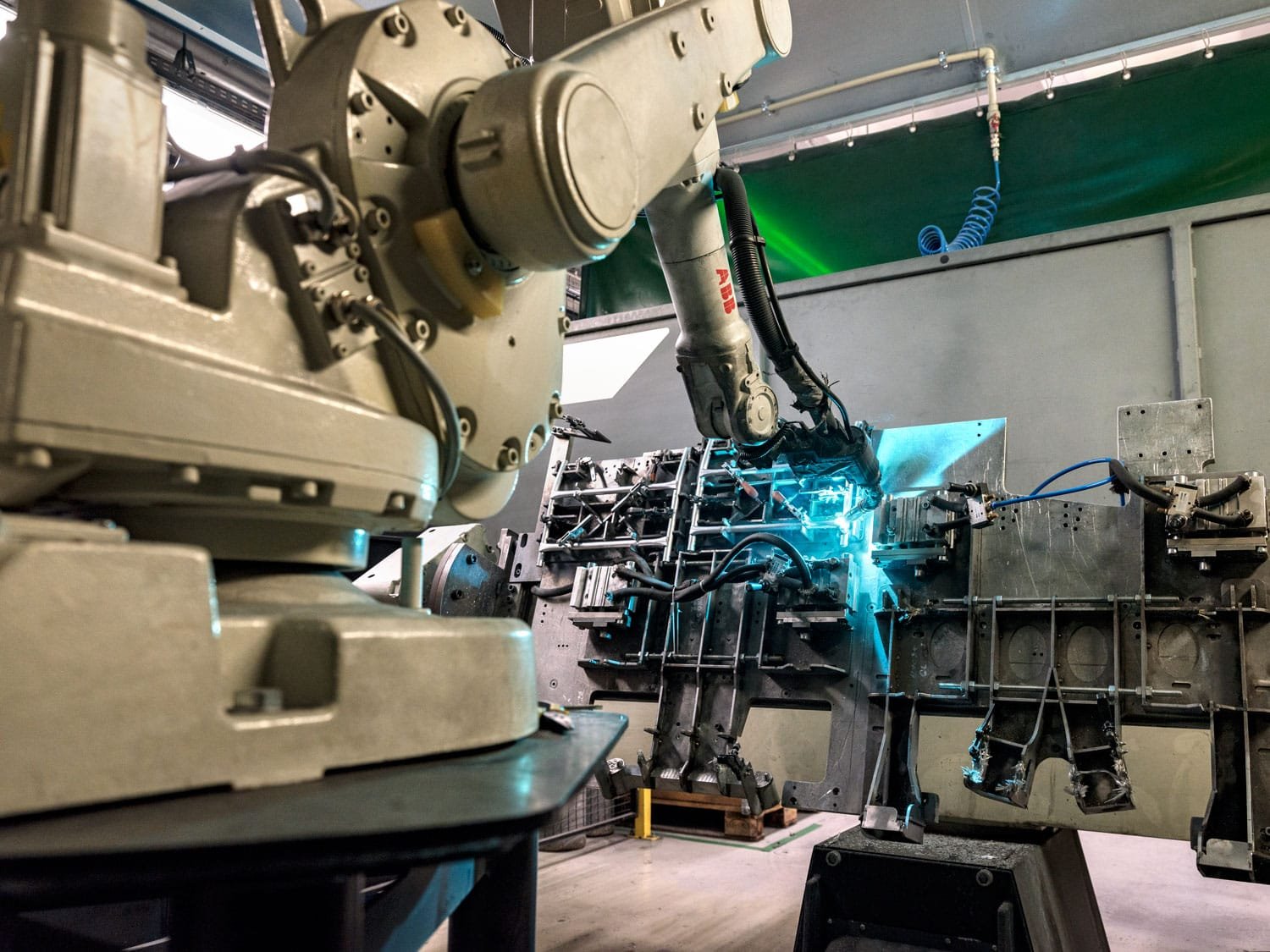
| Robotic and laser welding | ABB robot + Fronius CMT, laser, TIG, MIG/MAG | series on the robot, prototypes manually; fixtures built in-house | aluminium, carbon steel, stainless |
| CNC milling | 3 and 4 axis machines | parts up to 1000 mm | steel, aluminium, non-ferrous, plastics |
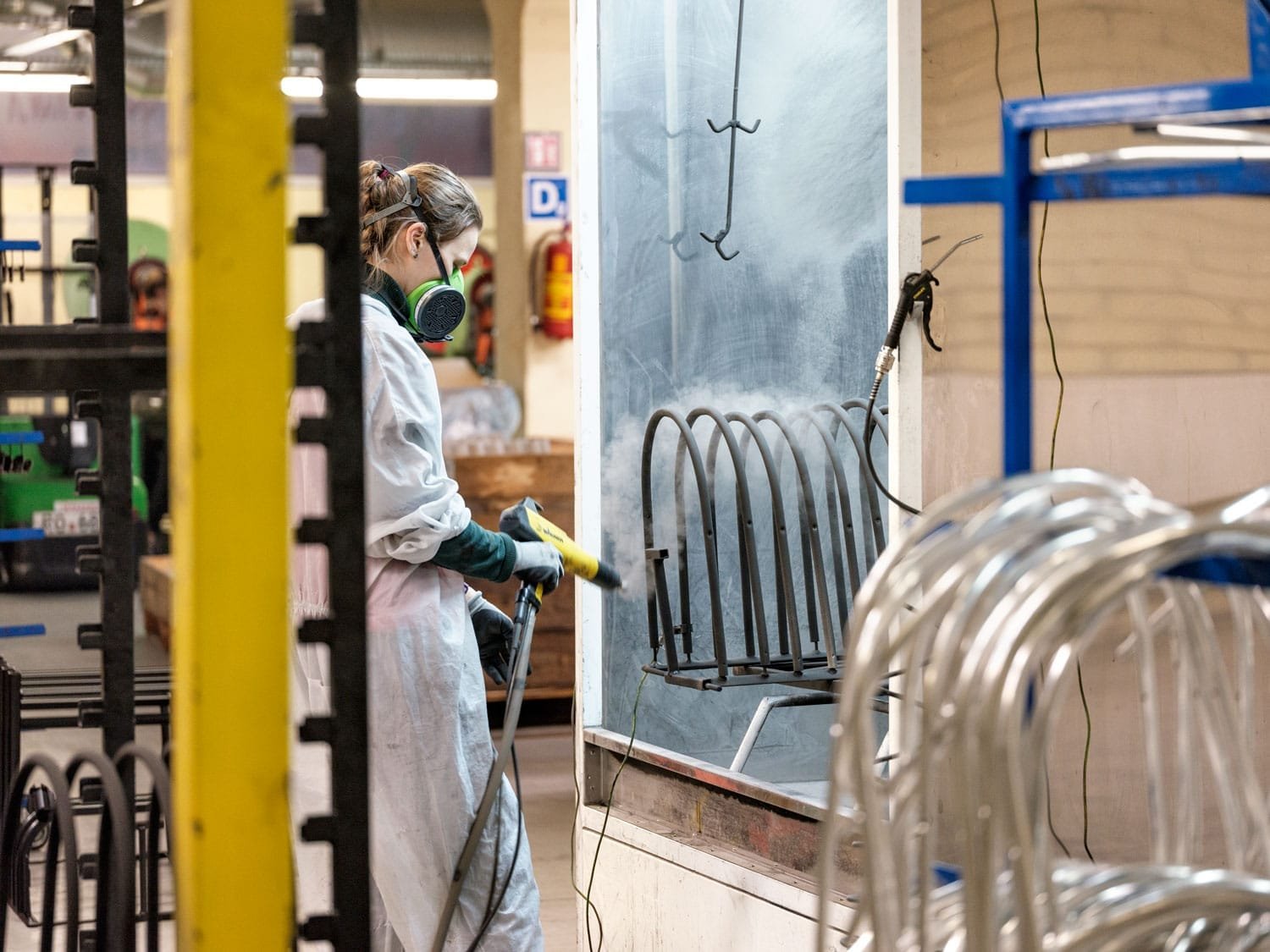
| Powder coating | automatic pre-treatment and coating line | 5500 × 1400 × 2600 mm, up to 430 kg; 1 million m² per year | aluminium, carbon, stainless, galvanised |
| Assembly and packing | assembly line | riveting, threaded joints, labelling, packing for shipment | complete products |
What we work with, and what each one demands
Aluminium has been our core material for more than twenty years, and it is the one that punishes a careless process chain fastest.
| Material | Typical applications | What it demands |
|---|---|---|
| Aluminium (5xxx, 6xxx) | lightweight structures, enclosures, furniture frames, transport | oxide removal before welding, filler matched to the alloy, low heat input, fixtures that hold geometry while cooling |
| Carbon steel | structures, brackets, machine frames, equipment housings | mill scale and corrosion removed by blasting before coating |
| Stainless steel | food, medical and outdoor equipment, visible surfaces | clean cut edge, controlled heat tint, blasting before coating to create adhesion profile |
| Galvanised steel | outdoor structures, mounting systems | gentle abrasive so the zinc layer survives, degassing bake before powder coating |
From file to finished part
Eight steps, none of them outsourced.
- Enquiry and engineering reviewWe check manufacturability before quoting and tell you what would make the part cheaper or more reliable to produce.
- QuotationPrice, lead time and technical conditions, calculated by operation – not refined later.
- Nesting and programmingParts are nested for material yield; cutting and bending programs are written and stored for repeat orders.
- CuttingSheet on the 12 kW fibre laser, tube on the tube laser, in one datum per part.
- FormingPress brake bending, tube bending, stamping and forming on the presses.
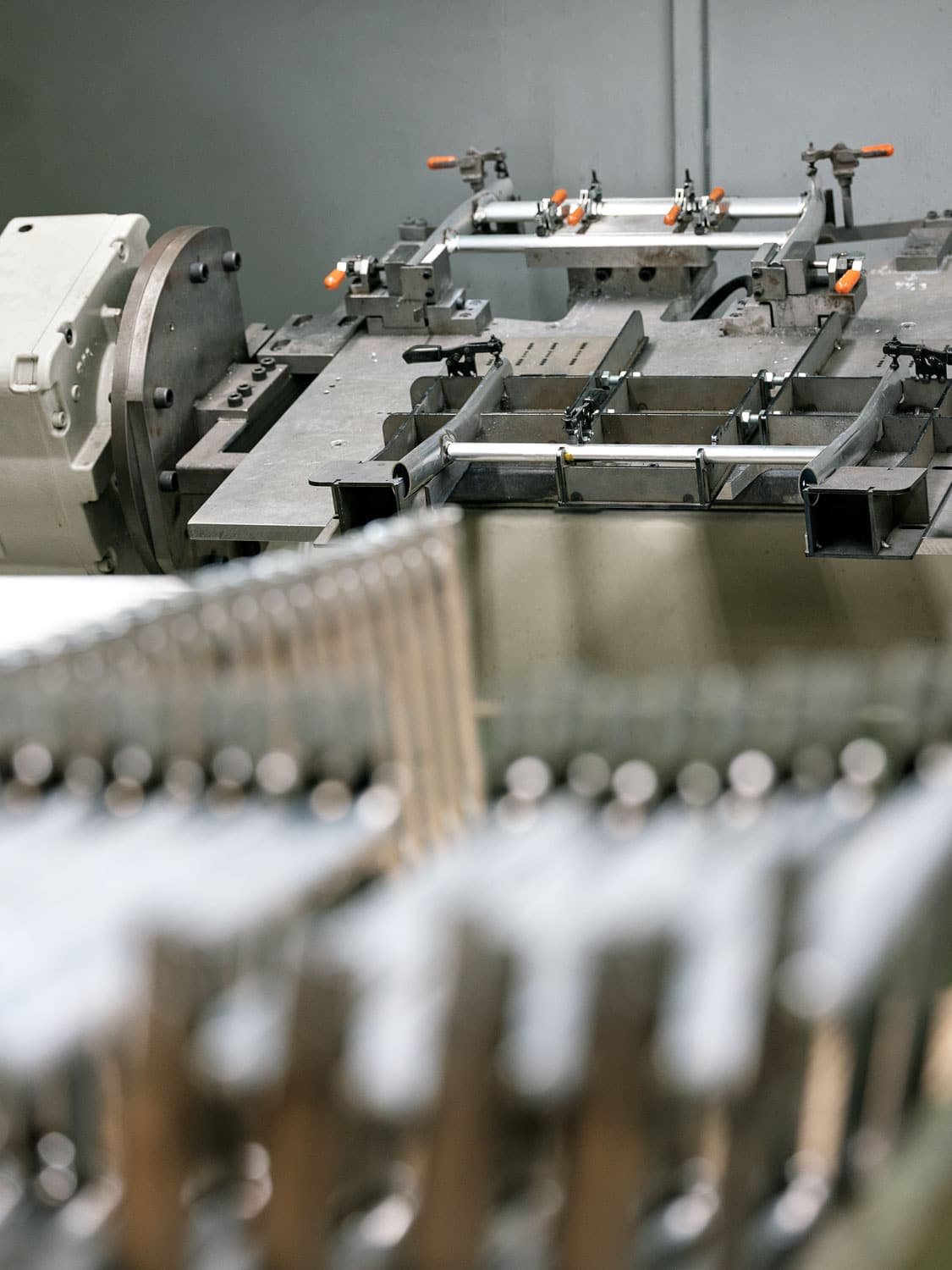
- JoiningRobotic CMT welding for series, laser welding for visible or thin joints, TIG and MIG/MAG for one-offs; fixtures designed together with the part.
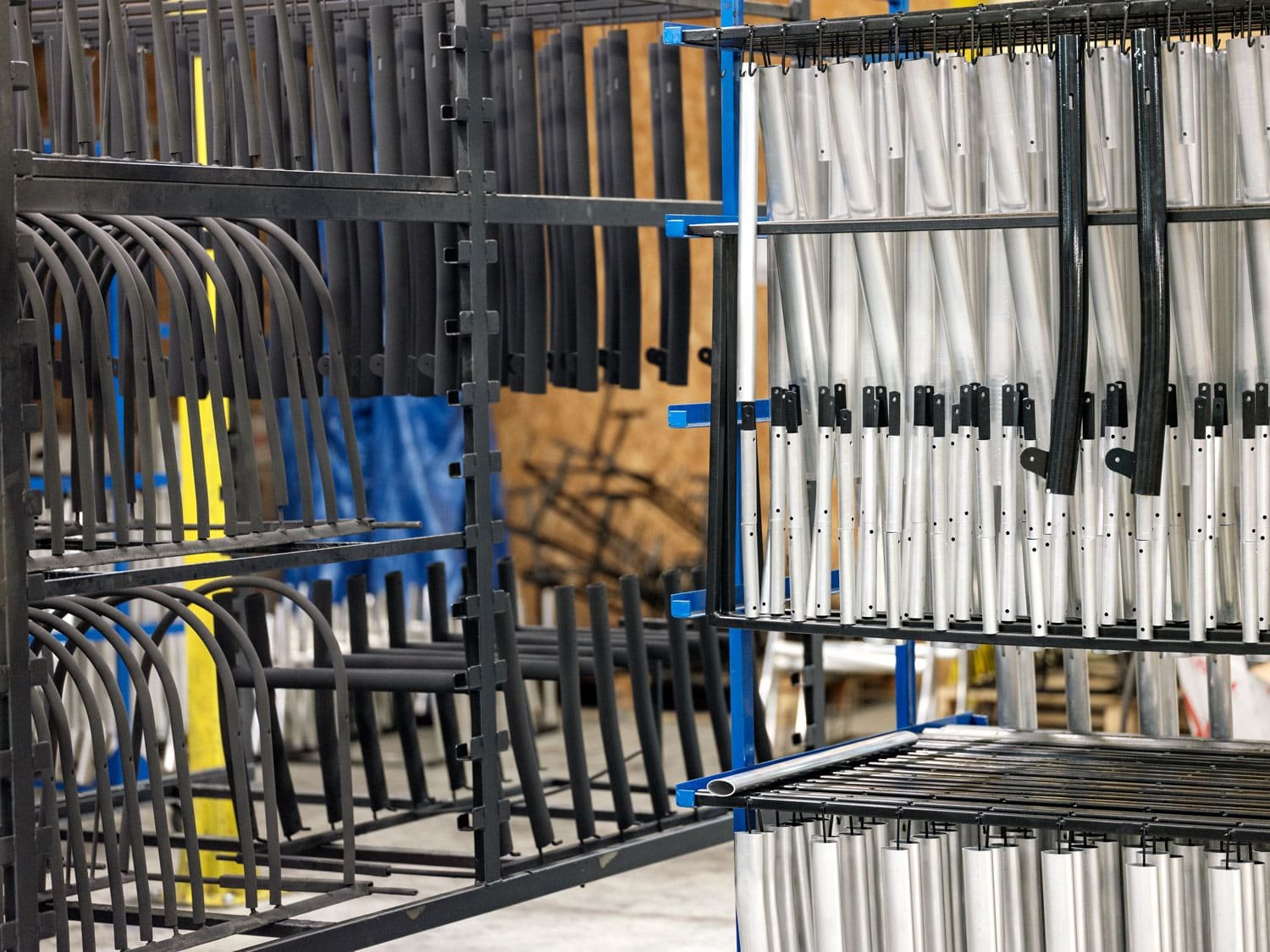
- Surface treatmentBlasting and degreasing where needed, automatic chemical pre-treatment, electrostatic powder coating and oven curing.
- Assembly, inspection and packingRiveted and threaded joints, dimensional and visual inspection, labelling and packing ready for shipment.
Design rules that decide the price
Most of a sheet metal part’s cost is fixed on the drawing, not in the workshop. These are the points we raise most often in engineering reviews.
What to send so the quotation is firm
A complete enquiry comes back as a firm price and lead time. An incomplete one comes back as questions, and both sides lose a day.
| What | Why it matters |
|---|---|
| Drawing: DXF or STEP, 1:1 in mm | DXF for flat parts, STEP for formed and welded assemblies; PDF only as a supplement |
| Material and alloy | EN AW-5754 and EN AW-6082 behave differently in bending, welding and coating |
| Thickness | decides cutting time, bend radius and whether the part fits the press |
| Quantity, and annual volume | decides laser versus stamping, and whether a die or fixture pays off |
| Tolerance class | general tolerances plus the few dimensions that are genuinely critical |
| Surface and colour | RAL number, gloss level, masked areas, visible faces |
| Weld requirements | which seams are visible, required finish, inspection level |
| Delivery | required date, packaging, delivery address |
Stated exactly as it is
We state our certification status as it stands, without claiming conformity where a certificate does not yet exist.
| ISO 9001 – Alumnita | being implemented |
| ISO 3834-2 welding quality requirements | being implemented |
| Tututis Group | ISO 9001 and ISO 14001 certified |
| Weld inspection | visual inspection of seams and dimensional check to the drawing |
| Material traceability | by alloy and supplier certificate |
| First article | first-article inspection before series release on request |
Where our parts end up
What a sheet metal part costs, and why
- Material, alloy and thickness
- Cut length and number of pierces
- Number of bends and setups
- Weld length, process and fixture complexity
- Coated area, colour changes and masking
- Quantity and how the parts nest on the sheet
- Tolerance and inspection requirements
- Assembly, labelling and packaging
For recurring parts the picture changes: programs and fixtures already exist, so repeat orders start without new setup, and above roughly 2 000–5 000 pieces a year stamping usually beats laser cutting on unit cost.
Frequently asked questions
Do you work to customer drawings only, or can you design the part?
Both. Send a drawing and we manufacture to it. If you have only an idea, a sample or a prototype, our CAD engineers prepare the design and the production documentation.
Which file formats do you accept?
DXF, DWG, STEP, IGES and PDF. For flat parts DXF at 1:1 in millimetres with closed contours; for formed and welded assemblies STEP is best, because it carries the real geometry rather than a projection.
What is the minimum order quantity?
One piece. Prototypes and single parts are normal work for us, and the same plant then produces the series without changing supplier.
Do you deliver to Germany?
Yes. Germany, Scandinavia and the rest of the EU are regular markets. Kaunas is within road-freight reach of most German industrial regions, and small batches can be shipped frequently rather than stockpiled.
Can you supply the material, or should we send ours?
Either. We normally supply the material, which keeps traceability in one place; customer-supplied material is also accepted after an incoming check.
Do you make welding fixtures?
Yes, in-house, designed together with the part. The fixture is a one-off cost that pays back over repeat orders, and because we cut the parts ourselves the fixture matches the real geometry.
How do you control welding quality?
Visual inspection of every seam and a dimensional check against the drawing. ISO 3834-2 welding quality requirements are being implemented.
Can you coat parts you did not manufacture?
Yes. Powder coating, blasting and degreasing are available as stand-alone services for parts made elsewhere, within the 5500 × 1400 × 2600 mm and 430 kg limits.
What is a typical lead time?
It depends on the operations and quantity; we state a firm date with the quotation. Repeat orders from stored programs are the fastest, because no new setup is needed.
Who will I be dealing with?
A production technologist, not a call centre. The person who quotes your part is the person who plans it into production.
Sheet metal fabrication in Lithuania – a single-source supplier
Sheet metal fabrication covers the manufacture of parts and assemblies from flat sheet and from tube: cutting the blank, forming it, joining the pieces, treating the surface and assembling the finished product. UAB Alumnita performs all of these operations in its own plant at Raudondvario pl. 127 in Kaunas, Lithuania, as part of Tututis Group, a manufacturing group operating since 1999.
Sheet is cut on a 12 kW fibre laser with a 4000 × 2000 mm working area and ±0.02 mm repeat positioning. Tube and profile are cut on a fibre tube laser that produces holes, slots and bevels in one cycle from a single datum, including zero-tail cutting that leaves no remnant. Forming is carried out by press brake bending, CNC tube bending up to Ø40 mm and a press shop of thirteen presses from 6 to 40 tonnes for blanking, piercing and forming in series.
Joining is done by an ABB robot with a Fronius CMT power source for repeating welds in series, by laser welding where the seam is visible or the sheet is thin, and by TIG and MIG/MAG for prototypes and non-standard assemblies. Welding fixtures are designed and built in-house together with the part. Surface treatment includes abrasive blasting, degreasing and automatic chemical pre-treatment, followed by electrostatic powder coating in the full RAL palette with matt, satin, gloss and textured finishes, for parts up to 5500 × 1400 × 2600 mm and 430 kilograms.
Our customers are machinery, equipment, furniture, construction and energy companies in Lithuania, the Baltics, Scandinavia and Germany that need one accountable supplier for a complete metal product rather than a chain of subcontractors. Quantities run from a single prototype to recurring series, and because programs and fixtures are stored, repeat orders start without new setup.
- Company
- UAB Alumnita
- Address
- Raudondvario pl. 127, LT-47188 Kaunas, Lithuania
- Group
- Tututis Group
- Services
- sheet laser cutting, tube laser cutting, bending, stamping, CNC milling, robotic and laser welding, blasting, powder coating, assembly
- Materials
- aluminium, carbon steel, stainless steel, galvanised steel
- Contact
- +370 656 05752, info@alumnita.lt
Send a drawing – receive a finished part
One supplier, one lead time, one point of accountability. Cutting, forming, welding, coating and assembly in our own plant in Kaunas, Lithuania.