
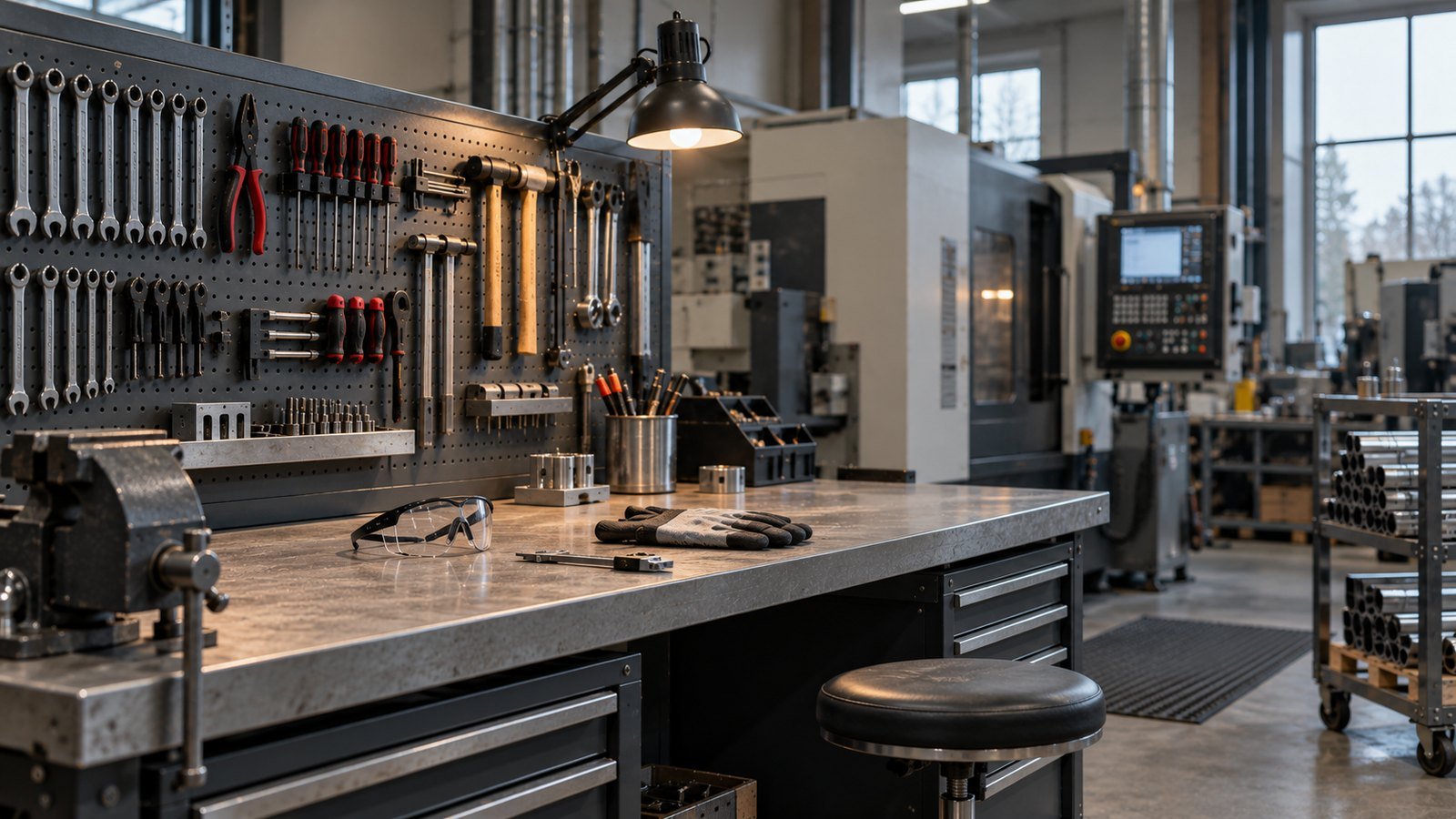
CNC milling
3-axis and 4-axis CNC milling
Milling of steel, aluminium, other non-ferrous metals and plastics: contours, holes, threads, pockets, faces and complex surfaces. Parts up to 1000 mm long – as a separate operation or part of the full production chain.
- 3 and 4 axesCNC milling machines
- Up to 1000 mmpart length
- Metals and plasticssteel, Al, non-ferrous
- In the chainwith laser, welding, coating
CNC milling – the key facts
Alumnita mills steel, aluminium, other non-ferrous metals and plastics on 3- and 4-axis CNC machines. Parts up to 1000 mm long are machined.
- Operations
- contours, drilling, tapping, counterboring, face milling
- Max. length
- 1000 mm
What we do on the milling machines
| Operation | Purpose |
|---|---|
| Contour milling | precise outer and inner contours |
| Drilling and reaming | accurate holes and mounting points |
| Threading | metric threads after cutting or welding |
| Pockets and slots | recesses, grooves, seats |
| Face milling | datum and mounting faces |
| 4-axis machining | several sides in one clamping |
Parameters
| Parameter | Value |
|---|---|
| Machines | 3- and 4-axis CNC milling machines |
| Max. part length | up to 1000 mm |
| Materials | steel, aluminium, non-ferrous metals, plastics |
| Batches | from single pieces to repeat runs |
When milling complements laser cutting
The laser cuts a contour quickly and accurately; milling adds what a laser cannot – threads, recesses, precise datum faces and machining after welding. With both in one plant the part never travels between suppliers and the datum stays the same.
Advice for milled parts
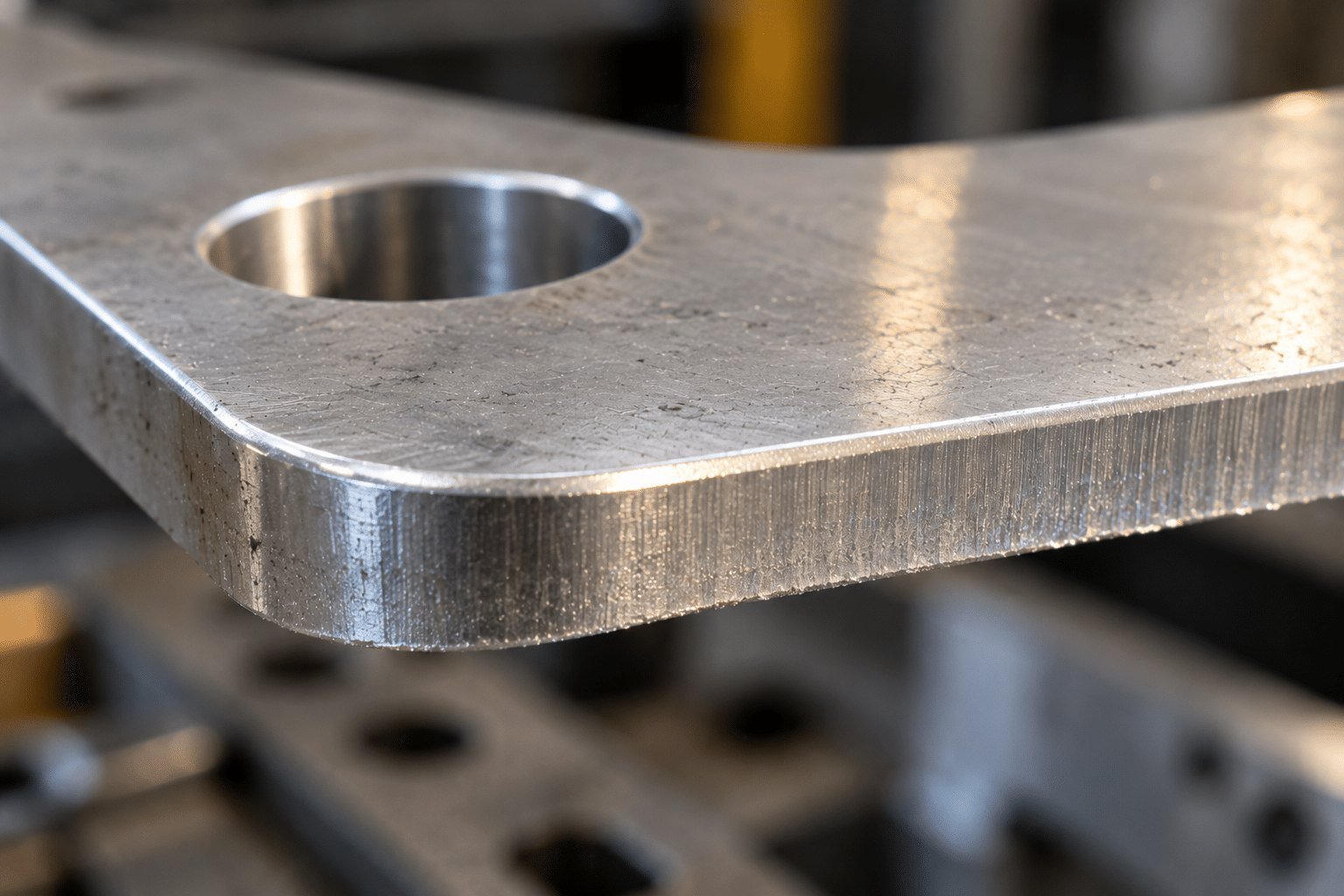
- Allow a radius on internal corners – sharp internal corners make machining more expensive
- Specify tolerances and surface roughness only for functional faces
- Standard thread sizes and depths shorten the cycle
- If the part is welded, state which faces are machined after welding
FAQ
Frequently asked questions
What size parts do you mill?
Parts up to 1000 mm long.
Do you mill plastics?
Yes, besides metals we also machine plastics.
Can you mill after welding?
Yes, this makes it possible to guarantee accurate mounting faces after welding distortion.
Do you mill one-off parts?
Yes, from a single piece to a series.
Do you mill from a 3D model?
Yes, machining programs are prepared from the STEP model and the drawing.
Do you cut threads?
Yes, metric threads are produced during milling.
Can milling be combined with laser cutting?
Yes – laser-cut parts are additionally machined on CNC machines.
CNC milling of metal parts
CNC milling removes material with a rotating tool under program control to create accurate contours, holes, threads, pockets and reference faces. Alumnita uses 3- and 4-axis CNC machines and processes parts up to 1000 mm long in steel, aluminium, non-ferrous metals and plastics.
Milling complements laser cutting and welding: threads and precise holes are added after cutting, and mounting faces are milled after welding to compensate for thermal distortion. Since all operations take place in one plant, the dimensional reference is maintained throughout.
This service is one step in the wider sheet metal fabrication chain: cutting, forming, welding, coating and assembly all run in the same plant in Lithuania.
- Machines
- 3- and 4-axis CNC
- Max. length
- 1000 mm
- Operations
- contours, drilling, threading, pockets, faces
- Materials
- steel, aluminium, non-ferrous metals, plastics
Manufacturing to your drawing – we deliver the finished product
Single-source manufacturing. The complete process chain – laser cutting, forming, robotic welding, powder coating and assembly – runs in our own plant in Lithuania. One supplier, one delivery date, one point of accountability.