
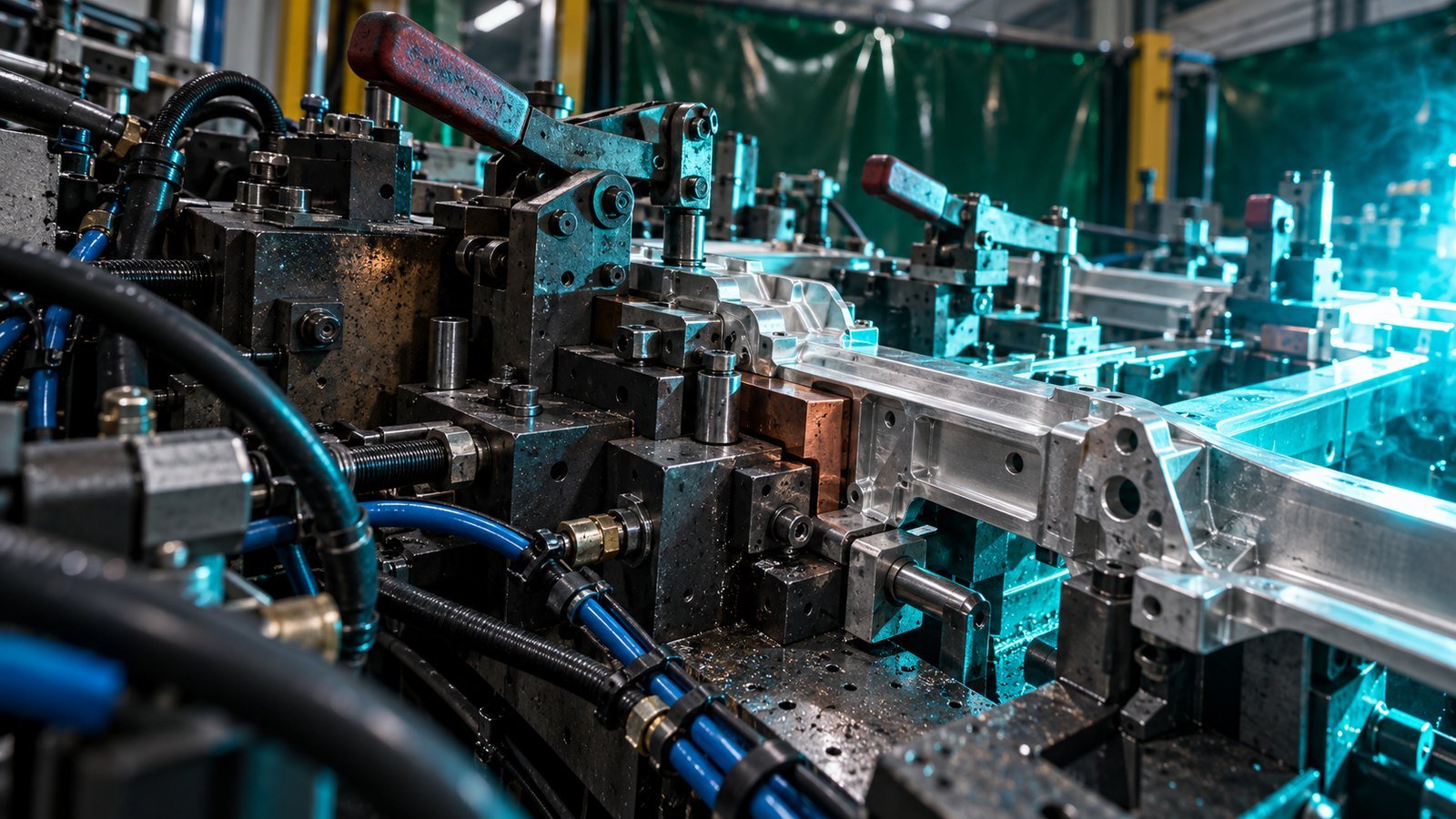
Aluminium
Aluminium fabrication: alloys, properties and processes
Aluminium is three times lighter than steel, naturally corrosion resistant and recyclable without loss of properties – but it needs different cutting, welding and surface preparation. A practical guide for engineers and buyers.
- 2.7 g/cm³about 1/3 of steel
- ~660 °Cmelting point
- Oxide layernatural corrosion protection
- 100 %recyclable without quality loss
When to choose aluminium instead of steel
- Weight matters: transport, mobile equipment, products lifted by hand
- Outdoor use: aluminium does not rust, and powder coating adds protection
- Appearance: precise profiles and smooth surfaces for decorative products
- Sustainability: recycling needs only about 5 % of the energy of primary production
- Lower installation cost thanks to lighter structures
Common aluminium alloys and their uses
| Alloy | Form | Properties | Typical use |
|---|---|---|---|
| EN AW-6060 | profiles | excellent extrudability and surface quality | frames, trims, windows, furniture |
| EN AW-6063 | profiles | similar to 6060, slightly stronger | architectural profiles |
| EN AW-6082 | profiles, plate | highest strength in the 6xxx series | structures, loaded assemblies |
| EN AW-5754 | sheet | good corrosion resistance, bendable | enclosures, transport, marine |
| EN AW-5083 | sheet, plate | very good corrosion resistance, weldable | boats, tanks, structures |
| EN AW-1050 | sheet | soft, very formable | decorative and formed products |
Laser cutting aluminium
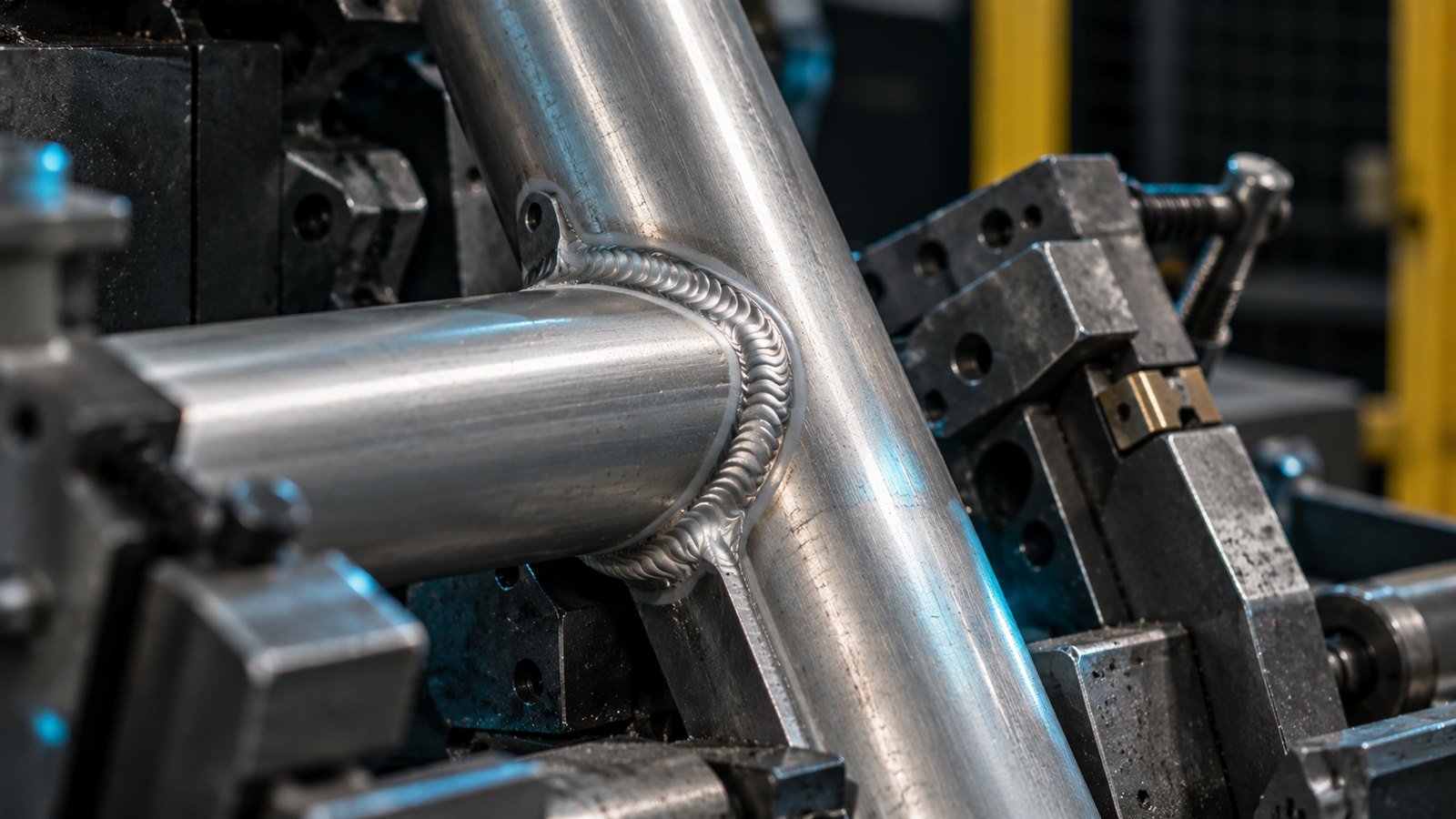
Aluminium reflects light and dissipates heat quickly, so it needs a high-power fibre laser and nitrogen. Our 12 kW laser cuts aluminium sheet fast and clean, and parts go straight to welding and coating. The tube laser cuts holes, slots and bevels in aluminium profiles without burrs.
Welding aluminium without distortion
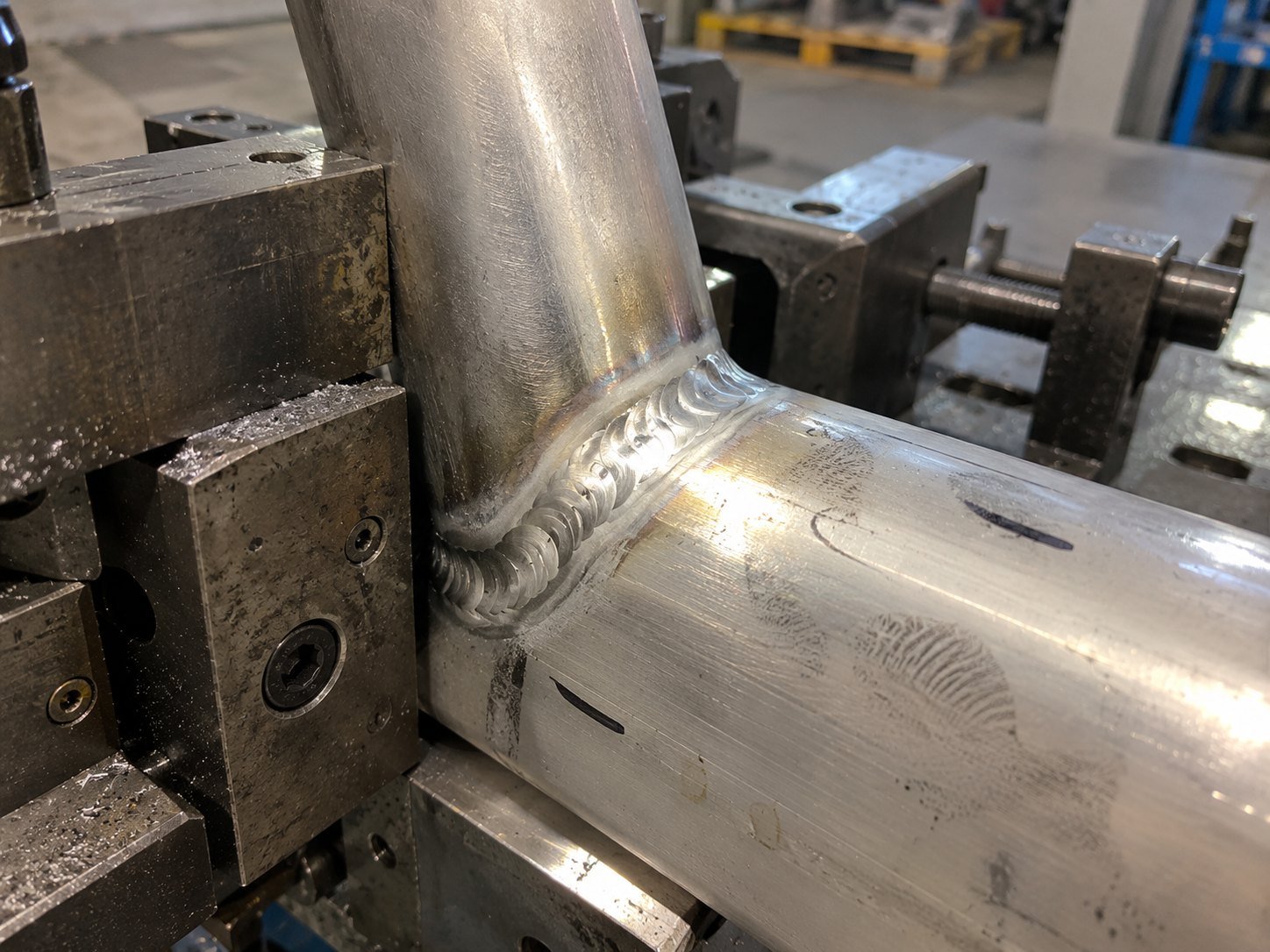
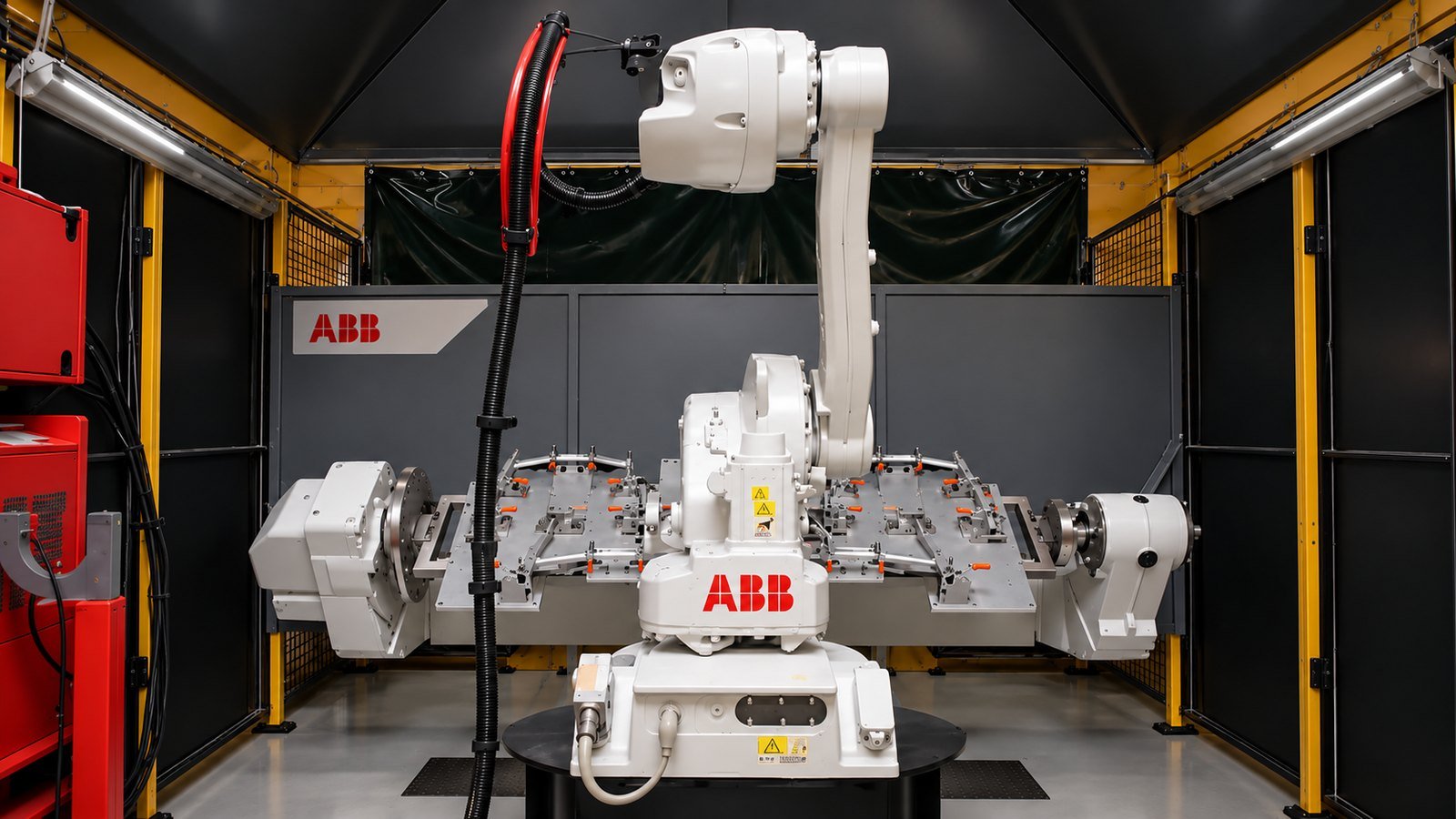
High thermal conductivity and the oxide layer make aluminium harder to weld than steel. We use the low-heat Fronius CMT process with an ABB robot, laser and TIG welding, and prepare the surface before welding to avoid porosity.
Pre-treatment and powder coating of aluminium
Coating life on aluminium depends on pre-treatment. Automatic chemical washing removes grease and prepares the surface so powder adheres well. The line coats parts up to 7000 × 1400 × 2600 mm and 430 kg.
Design tips for aluminium parts
- Allow larger bend radii than for steel – especially for 6xxx alloys
- Choose 5xxx sheet if the part will be bent
- Avoid very thin walls next to welds
- If appearance matters, mark visible faces and the finish class
- Where aluminium touches steel, isolate against galvanic corrosion
FAQ
Frequently asked questions
Does aluminium rust?
No. A natural oxide layer protects it; in aggressive environments powder coating adds protection.
Which alloy is best for bending?
For sheet parts we usually recommend 5754 – it bends well and resists corrosion.
Is aluminium more expensive than steel?
The material costs more, but lower weight, corrosion resistance and installation cost often mean a lower total cost.
Aluminium fabrication specialists in Lithuania
Alumnita has specialised in aluminium processing for more than 20 years. Laser cutting, low-heat CMT and laser welding, chemical pre-treatment and powder coating of aluminium are performed in one plant, ensuring consistent quality for lightweight structures, enclosures and architectural products.
Manufacturing to your drawing – we deliver the finished product
Single-source manufacturing. The complete process chain – laser cutting, forming, robotic welding, powder coating and assembly – runs in our own plant in Lithuania. One supplier, one delivery date, one point of accountability.