
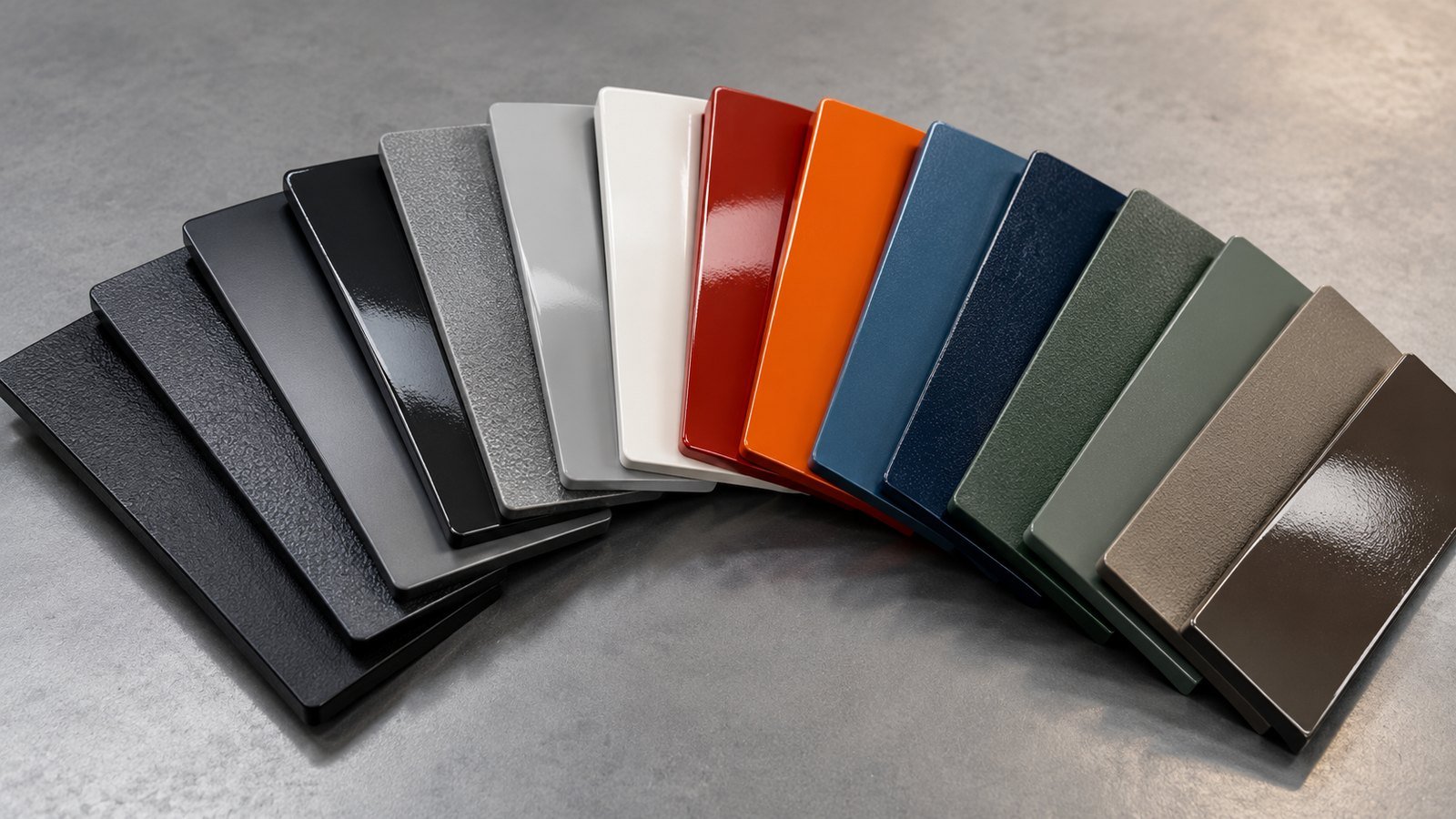
For projects within 5 km of the sea, standard powder coating pre-treatment is not enough – the Qualicoat specification defines a separate Seaside class with a deeper chemical etch for exactly this case. The distinction is not marketing. It is a measurable difference in how much aluminium is removed before the powder ever touches the part, and it cannot be verified on the finished component.
Powder coating is permeable to moisture
The common assumption that a polyester coating is a sealed barrier is wrong. A powder coating film is micro-porous, so moisture reaches the metal through the coating thickness. The purpose of pre-treatment is therefore not to "clean" the part but to seal the aluminium surface and create the micro-relief the powder mechanically keys into.
If that is not done properly, corrosion starts under the coating rather than on it. From the outside the part looks perfect until the growing oxide lifts the film from beneath. At that point repair is impossible – the coating has to be stripped and the part re-processed from bare metal.
What the Seaside class actually changes
The core difference is etch depth. In the Seaside class the amount of aluminium removed is increased to 2 g/m², using an acid etch or a combination of acid and alkaline etching. Removing more of the surface layer also removes the alloy inhomogeneities at which pitting corrosion starts in a chloride-bearing atmosphere.
| Criterion | Standard pre-treatment | Seaside class |
|---|---|---|
| Etch depth | Base requirement | Up to 2 g/m² |
| Application zone | More than 5 km from the coast | Within 5 km of sea or lagoon |
| Testing | Standard regime | Additional corrosion testing |
| Typical projects | Interior and inland urban structures | Facades, balconies, outdoor furniture, marine fittings |
Note what this means commercially: Qualicoat describes a process, not only an end result. A coated part can be checked for film thickness and adhesion, but whether the etch removed 1 or 2 g/m² is invisible on the finished component. Only process control and the coater’s records show it. If a supplier offers Seaside-level work without being able to describe their etch control, you are buying a claim, not a class.
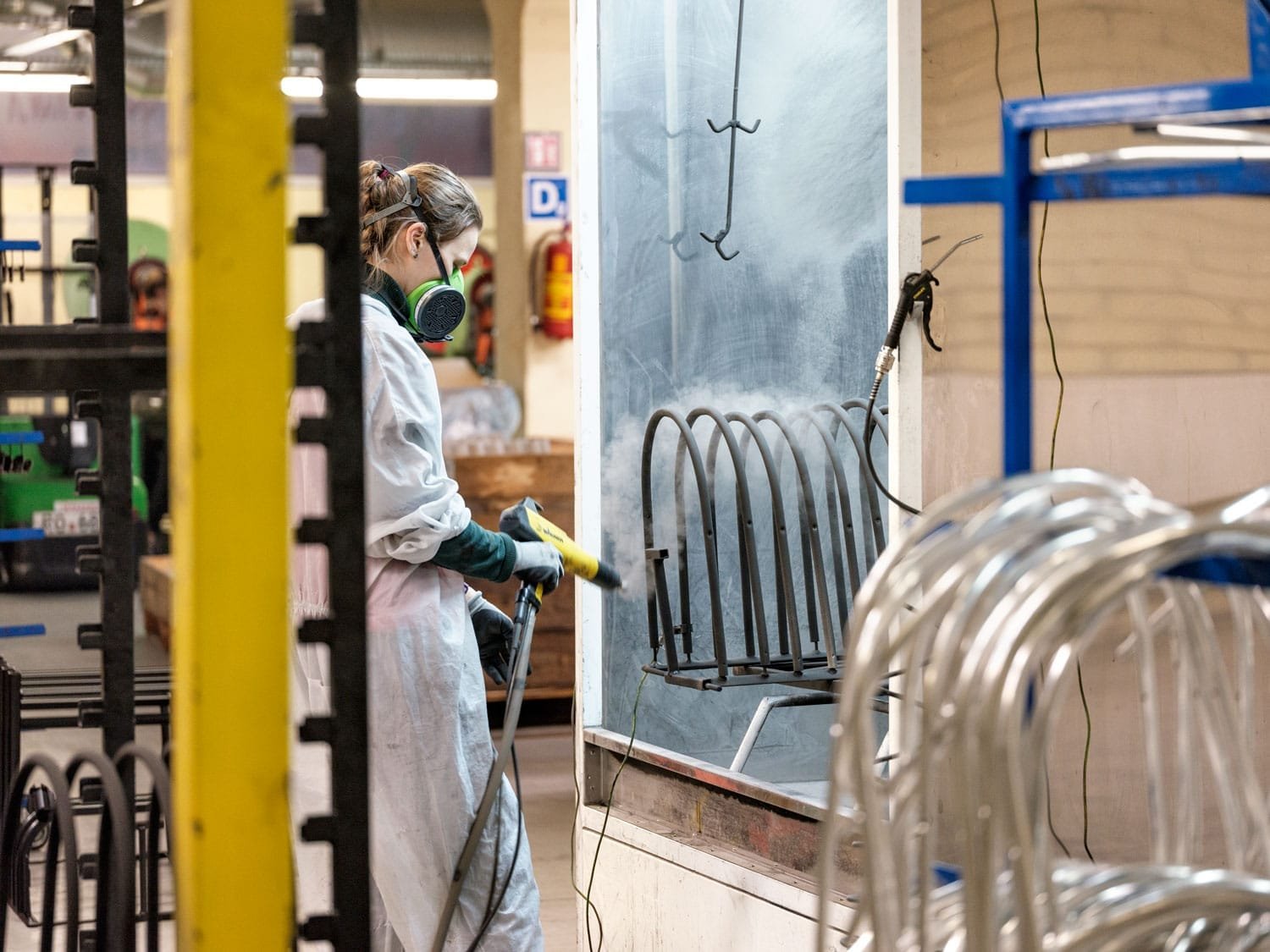
Four stages where the result is decided
- Degreasing. Removes oils, cutting emulsions and fingerprints. A frequent failure is parts that have sat in a warehouse for weeks and collected condensation.
- Etching. Removes the natural oxide layer. The quantity of aluminium removed, in g/m², correlates directly with coating life in a marine atmosphere.
- Conversion layer. This is the layer the powder actually bonds to. Chrome-free titanium and zirconium systems became the European standard under REACH restrictions, but they are more sensitive to bath temperature, pH and rinse water conductivity than the chromate systems they replaced.
- Coating with no pause. A fresh conversion layer is active for a limited time. A part prepared and left overnight re-oxidises and has to go back through the line.
What to specify on the drawing for a coastal project
- Drainage holes in closed profiles – the chemistry has to get in and, more importantly, get out. Trapped pre-treatment solution is a guaranteed corrosion site.
- Hanging points placed where the coating does not matter. Every part hangs from something, and that contact point will be uncoated.
- Edge radii – coating is always thinner on a sharp edge, and that is where the first corrosion appears. Specify a radius rather than a laser-cut knife edge on exposed parts.
- A specification line – the Seaside-class requirement must appear in the technical documentation, not in a negotiation after the first failure. "Powder coated RAL 7016" does not commit anyone to anything.
- Welds finished before coating – weld spatter and un-ground starts corrode first. Agree the finish level with welding at design stage.
What to check on incoming inspection
- Film thickness at several points, including edges and internal corners. For architectural work, 60 µm minimum is the usual requirement, and corners are where it will be thinnest.
- Adhesion by cross-cut test to EN ISO 2409.
- Colour and gloss – check the whole batch side by side in daylight, not part by part under workshop lighting. Batch-to-batch gloss drift is the complaint that arrives after installation.
Alloy and geometry choices that help
Coating is the last line of defence, not the only one. For marine exposure the 5xxx series – EN AW-5754 for folded sheet, EN AW-5083 for thicker plate – carries considerably more inherent corrosion resistance than a coated structural grade, and is worth choosing even under a Seaside-class finish. Structural members in EN AW-6082 T6 are fine, but detail them with drainage and generous radii. See aluminium fabrication for the grades we process and design support if the detailing is still open.
Buying coated aluminium assemblies as one package
Alumnita is a metal fabrication plant in Kaunas, Lithuania, part of Tututis Group, with an in-house powder coating line alongside laser cutting, bending, welding and assembly. Qualicoat Seaside class coating is available for coastal projects. Keeping fabrication and coating on one site matters more here than elsewhere: parts do not spend a week in transit collecting condensation between the last mechanical operation and the pre-treatment line, and there is one party responsible if the finish fails. ISO 9001 is being implemented. Request a quote with your drawings, the RAL reference and the distance from the coast.
FAQ
When is Seaside class pre-treatment required?
When the installed project is within 5 km of the sea or a coastal lagoon. Beyond that distance, standard Qualicoat pre-treatment is normally sufficient.
Can you coat over an existing coating?
No. The old coating is stripped chemically or thermally and the part is pre-treated again. Powder applied over old paint bonds to the paint, not to the metal.
Is chrome-free pre-treatment inferior?
No, provided the process is controlled. Chrome-free titanium and zirconium systems reach the same performance but have a narrower window of acceptable bath parameters.
How does anodising compare with powder coating?
Anodising is an oxide layer grown electrochemically from the aluminium itself; powder coating is an applied polymer film. Anodising is more abrasion resistant, but the colour range is limited.
Related: Powder coating · Aluminium · Industries · Request a quote